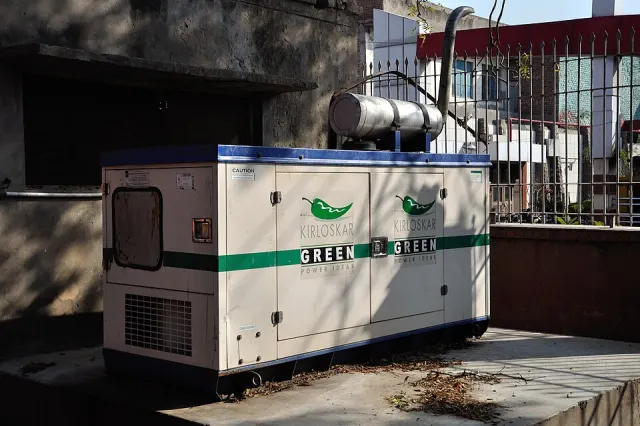
DG sets for campus standby power, sized on the essential load
Backup power common to institutions, apartments and factories.
The range above is an indicative planning figure taken from our own research, not a quotation and not an offer. buytogethr is pre-launch and has closed no pools.
What you are actually buying
A diesel generating set is bought as a package rather than a machine: engine and alternator, controller, acoustic enclosure, base fuel tank, changeover or automatic mains failure panel, cabling, foundation, exhaust routing and the statutory clearances that go with fuel storage and stack height. Bids differ on whether the rating quoted is standby or prime, on whether derating for site ambient temperature and altitude has been applied, on engine and alternator make, on enclosure sound level and the distance at which it is measured, and on how much of the civil, cabling and panel work sits inside the price. The usual mistake is sizing against connected load instead of the essential load actually to be backed, producing a set that runs lightly loaded, wet stacks and ages badly.
Why dg set suits collective purchasing
The correspondence puts DG sets among the top five categories for aggregation, and the structure supports it. Ratings come in a short ladder of standard sizes, so institutions buying different capacities are still buying from one catalogue and one specification. Manufacturers compete openly and each campus buys a single set, perhaps twice in a generation, which is precisely the fragmentation that pooling corrects. The set and the service contract pool well. The foundation, cabling, exhaust routing and local clearances do not, and should be priced as a separate local scope so the aggregated comparison is not distorted by site work.
Pin down before price
- Rating declared as standby or prime kVA at site conditions, showing the derating applied for ambient temperature and altitude
- Emission-norm compliance and the exact engine and alternator make and model, frozen before pricing
- Enclosure sound level with the measurement distance stated, plus exhaust height and routing
- Scope boundary in writing: changeover or AMF panel, cabling, earthing, foundation, fuel tank capacity and first fill
- On-load site test against the actual essential load as a condition of acceptance
What drives ten-year cost
- Fuel dominates the lifetime cost; specific consumption at the load you will genuinely run matters more than the headline price
- Service contract terms, oil and filter intervals, and how running hours are recorded and verified
- Shortened life and injector fouling from a set that is chronically underloaded
- Whether spares for that engine family remain available in the district in year eight