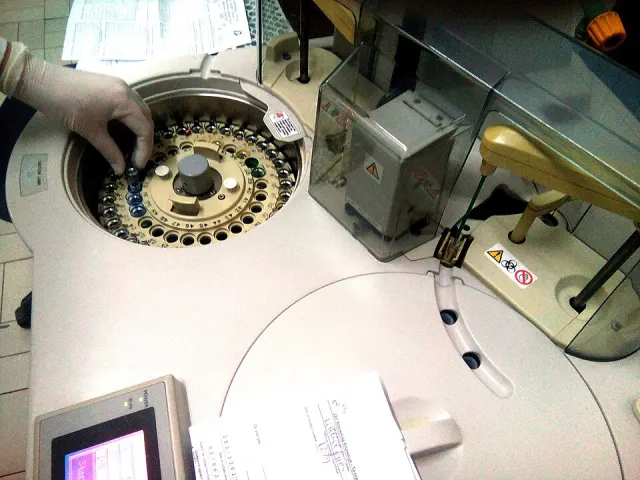
Biochemistry analyser for teaching labs — cost and reagent terms
Teaching-hospital lab analyser; high ticket, standard specification.
The range above is an indicative planning figure taken from our own research, not a quotation and not an offer. buytogethr is pre-launch and has closed no pools.
What you are actually buying
A teaching-laboratory biochemistry analyser is bought for throughput a college can actually keep busy, not for the highest specification available. The distinction that matters is between open and closed systems: a closed analyser ties the college to the manufacturer’s own reagents for the life of the machine, and that contract, not the purchase price, is where the money goes. Quotes vary on reagent pricing and minimum offtake, calibration and control material, service response, and whether student throughput during practical sessions has been considered at all. A machine sized for a busy hospital laboratory can be the wrong purchase for a college running scheduled practicals.
Why biochemistry analyser suits collective purchasing
Teaching laboratories are a strong aggregation case because the specification is genuinely standard across colleges of similar intake, and because the recurring reagent commitment is the real contract. A single college has almost no leverage over reagent pricing once a closed system is installed; several colleges committing together are negotiating the thing that actually costs money. The founder’s note that medical, nursing and paramedical colleges form three buyer layers matters here, since all three run comparable laboratories and can pool a single specification.
Pin down before price
- Open or closed reagent system, and whether third-party reagents are permitted
- Throughput per hour with the ISE module fitted, not the headline figure
- Full test menu quoted with a price per reportable test, held for the contract term
- Onboard reagent cooling, sample positions and minimum sample volume
- Water quality, power conditioning and bidirectional LIS connectivity
What drives ten-year cost
- Reagents, calibrators and controls at your real daily workload, not at rated throughput
- Tests lost to reagent shelf life once a pack is opened at low volumes
- Lamp, cuvette segment and ISE electrode replacement
- Service contract, application support and the response time written into it