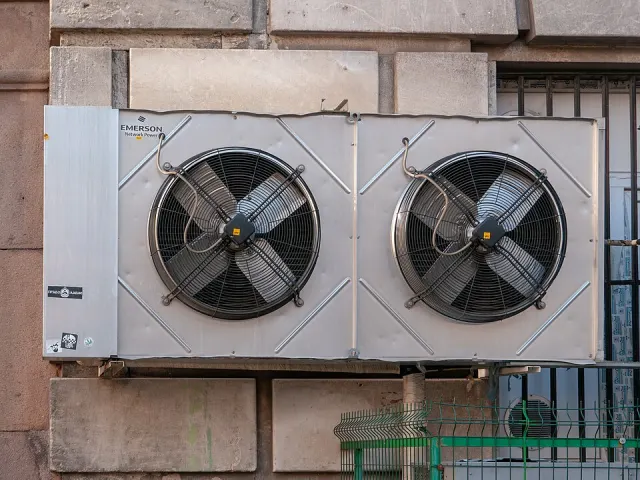
HVAC and central AC, pooled as plant rather than installation
Hospitals, hotels, offices, apartments and institutions all create demand.
The range above is an indicative planning figure taken from our own research, not a quotation and not an offer. buytogethr is pre-launch and has closed no pools.
What you are actually buying
What is bought is a duty, not a tonnage: chillers with their pumps and cooling towers, or VRF outdoor and indoor sets, air handling and fan coil units, ducting and insulation, and the controls that run them. Hospitals add a required air regime — air changes, filtration stages, room pressure and validation of the theatre. At Rs. 5–50L+ the quotes rarely differ on the machine as much as on the assumptions behind it and the scope around it. Ask who owns the heat-load calculation, then check the indoor and outdoor design conditions, fresh-air quantity and diversity each bidder assumed. Duct gauge, insulation thickness, electrical scope and commissioning are where comparable-looking prices quietly separate.
Why hvac / central ac suits collective purchasing
Ranked second in the founder correspondence, for a plain reason: hospitals, hotels, offices, apartments, commercial buildings and institutions all generate the same demand, so the buyer pool is deep and unconnected. Plant standardises on a written duty schedule — chillers, VRF sets and air handling units can be bid as equipment for many sites at once. Installation does not. Ducting, piping and commissioning are site work that stays with a local contractor and should be priced per site against a common schedule of items. Pool the plant and the maintenance terms, and state plainly that the installation line sits outside the aggregated price.
Pin down before price
- Heat load, with the design conditions, occupancy and fresh air it assumes
- Equipment duty and efficiency at part load as well as full load
- Hospital air regime: air changes, filtration stages, pressure, witnessed validation
- Duct and pipe scope — material, gauge, insulation and the test standard
- Controls and BMS points list, and what must integrate with existing systems
What drives ten-year cost
- Electricity dominates ten-year cost, and plant runs at part load most of the year
- Refrigerant choice and its phase-down timetable, which sets future service cost
- Maintenance contract, filter replacement and periodic revalidation of critical areas
- Water treatment and make-up wherever cooling towers are used