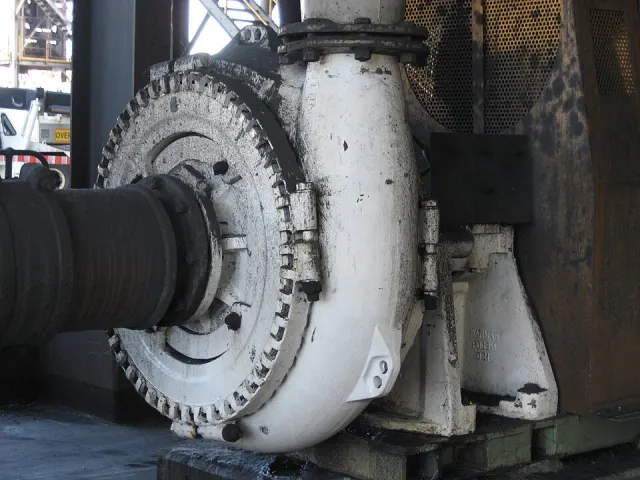
Pumps and water systems: pooling by duty point, not by pump
High potential, verdict very good; queued after panels and transformers.
The range above is an indicative planning figure taken from our own research, not a quotation and not an offer. buytogethr is pre-launch and has closed no pools.
What you are actually buying
The purchase covers pumping sets for raw water, transfer, boosting and drainage, the storage they serve, treatment where the site needs it, the distribution pipework, valves, level instrumentation and a control panel. Quotes vary on the duty point each bidder assumed, the efficiency of the pump at that point rather than at its best point, motor efficiency class, the materials in contact with the water or effluent, whether variable speed control is included, and how much pipework and valving sits inside the price. Buyers commonly compare motor ratings, which says almost nothing, and size from peak instantaneous demand, which leaves the set running away from its efficient range for most of the day.
Why pumps / water systems suits collective purchasing
Pumps aggregate well because duty points cluster. A handful of flow and head bands cover the transfer and booster requirements of most hospitals, apartment blocks and institutional buildings, so one schedule reaches a large and otherwise disconnected group of buyers, and the manufacturer side is a small number of established pump makers who can be asked to compete directly. The honest limit is treatment. An effluent or water treatment plant is design-led and site-specific, and pools far less well than the pumps themselves; the sensible pattern is a common specification for treatment with individual designs, and true aggregation on the pumping sets, motors and controls.
Pin down before price
- Duty point stated as flow and head, with the pump curve and the efficiency at that exact point
- Motor efficiency class, and whether variable speed control is required for the load pattern
- Materials of construction for impeller, casing and shaft, matched to the water or effluent handled
- Standby philosophy: duty and standby arrangement, auto changeover, dry run and level protection
- Battery limits: tanks, suction and delivery pipework, valves, panel and instrumentation
What drives ten-year cost
- Electricity dominates the lifetime cost, and it follows efficiency at the real duty point
- Mechanical seal, bearing and impeller wear intervals for the water quality actually on site
- Treatment consumables where fitted: membranes, resin, media and chemicals
- What an unplanned outage of the pumping set costs the building it serves