AI upgrade for imaging you already own, without replacement
Software or AI workstation retrofit; usually no machine replacement needed.
The range above is an indicative planning figure taken from our own research, not a quotation and not an offer. buytogethr is pre-launch and has closed no pools.
What you are actually buying
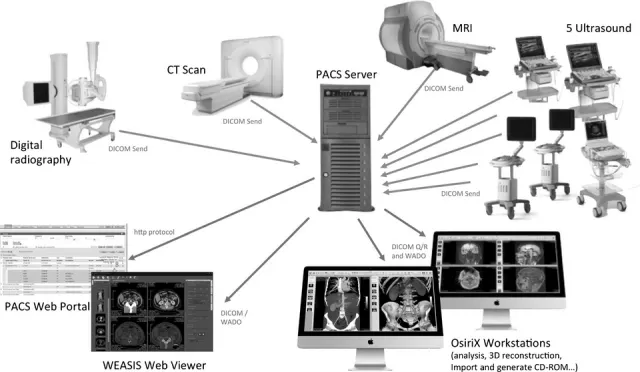
An AI upgrade adds capability to a scanner the institution already owns – reconstruction, detection, triage, measurement – as software or as an AI-enabled workstation beside the machine, in most cases without replacing the scanner. What is bought is a licence and an integration rather than an asset: a term, a licence unit counted per scanner, per study or per site, a deployment that is on-premises or hosted, and a route for results into the radiologist's report. Compatibility is the gate. It turns on the make, model, software version and DICOM interface of each machine; some applications work across manufacturers, others need a particular integration, and an older scanner with obsolete hardware may support very little.
Why ai upgrade for existing imaging suits collective purchasing
This aggregates more easily than machines, for structural reasons: there is no freight, no site work and no installation window, so the group can be larger and geographically spread, and far more institutions can join an AI procurement than actually need a new scanner. The specification is a clinical use case rather than a model number, so hospitals running different scanners can still buy as one. The condition is compatibility – the group must be sorted into cohorts by make, model and software version before any quote is comparable, or apparently identical quotations turn out to describe different work.
Pin down before price
- The clinical use case first: what the software must detect, measure or reconstruct, and on which region
- Compatibility confirmed in writing per scanner – make, model, software version, DICOM conformance
- Regulatory clearance in India for the intended clinical claim, stated by the supplier
- Deployment: on-premises or hosted, data residency, PACS and RIS integration, behaviour when the link drops
- Licence unit and term, and what access remains when the term ends
What drives ten-year cost
- Subscription renewal, which is the entire cost once the first term ends
- Workstations, viewer licences and network capacity the software assumes are already in place
- Version upgrades, and the revalidation and retraining each one triggers
- Re-integration work whenever a scanner underneath the software is replaced