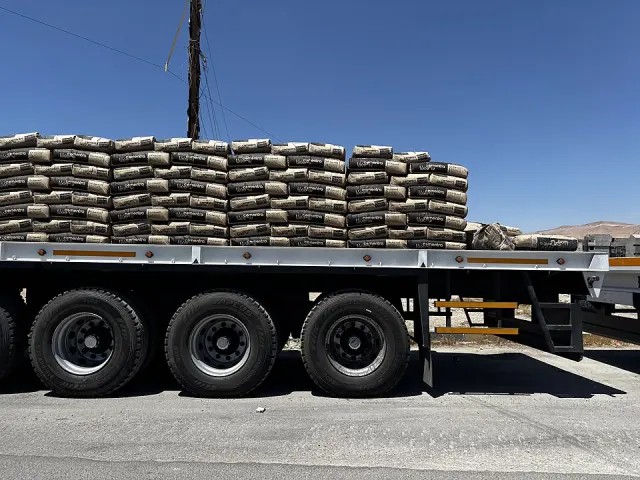
Cement: bulk supply across sites pouring in the same season
Low group-buy potential despite volume; commoditised and heavily contested.
The range above is an indicative planning figure taken from our own research, not a quotation and not an offer. buytogethr is pre-launch and has closed no pools.
What you are actually buying
What is bought is a cement type and strength grade, delivered in bags or in bulk to a silo, phased against a pour programme. Ordinary Portland and blended cements behave differently: blends gain strength more slowly, which matters on a job planned around early formwork stripping. Quotes vary on type and grade, the source plant and therefore consistency between lots, bag against bulk, freight, and whether the price holds for the season. Two mistakes recur. One is treating all cement as interchangeable and discovering the difference at stripping. The other is ordering ahead of the programme: cement has a shelf life, and a stack that waits loses strength before it is ever mixed.
Why cement suits collective purchasing
The founder places cement fourteenth of fifteen, low group-buy potential despite very large volume, very high competition, verdict not initially. The obstacle is structural rather than commercial. Freight radius from the plant sets much of the delivered price, so buyers pooled across districts do not become a single customer to any one works, and distributors already extend a published trade rate at modest volume. The pooling that does work is narrow and local: sites inside one plant's freight radius, pouring in the same months, committing to one type and grade against a common schedule. Useful, but not a category to build a vertical on.
Pin down before price
- Cement type and strength grade matched to the structural design and the stripping programme
- Source plant named, so lot-to-lot consistency can be held to one origin
- Bag or bulk, and for bulk the silo capacity, discharge arrangement and site access
- Delivery phased to the pour programme, with a cap on quantity held on site at any time
- Testing on receipt, and who bears the cost of a rejected lot
What drives ten-year cost
- Freight from the plant, which moves with distance more sharply than the ex-works rate
- Shelf life and storage loss where cement arrives ahead of the pour
- Rework where lot-to-lot variation shows up in finish or in cube results