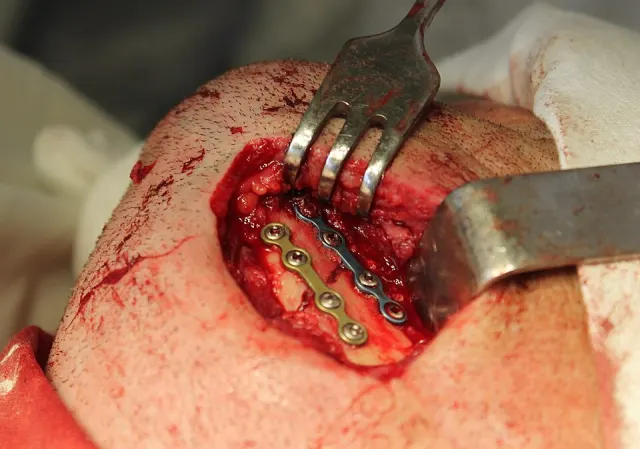
Orthopaedic implants, plates, screws and nails on rate contract
Highest-value recurring ortho line; 37% want implant standardisation.
The range above is an indicative planning figure taken from our own research, not a quotation and not an offer. buytogethr is pre-launch and has closed no pools.
What you are actually buying
What is bought here is not an item but a rate contract against a matrix: plate families and lengths, screw diameters and lengths, intramedullary nails, wires, and the prosthesis ranges the unit actually implants. Quotes differ on material grade and finish, locking against non-locking constructs, anatomic against straight plates, sterile-packed against loose, and on the size spread quoted — the common sizes are priced keenly and the rare sizes carry the margin. The recurring mistake is comparing unit prices while leaving instrumentation unaddressed: who owns the instrument sets, whether loaner trays arrive with the case, and who carries consignment stock on the hospital shelf. Device registration and batch traceability belong in the same contract.
Why implants — plates, screws, nails, prostheses suits collective purchasing
This is the highest-value recurring aggregation target in orthopaedics. Demand is continuous rather than project-driven, so a pool does not wait for a group to form; it renews with the operating list. Implantable devices are also among the categories hospitals most want to standardise. The honest limit is that surgeon preference, compatibility with instrument sets already in theatre, and regulatory requirements all constrain how far one specification can travel. A workable pool qualifies several suppliers per implant category and material grade, contracts across the whole size matrix, and leaves the surgeon a qualified choice rather than a single mandated system.
Pin down before price
- Material grade and finish stated per implant family, not per order
- Locking and non-locking constructs, and anatomic against straight plates
- The full size matrix priced, including sizes used only occasionally
- Instrumentation: who supplies the sets and trays, and on what terms
- Sterile packaging, shelf life, batch traceability and device registration
What drives ten-year cost
- Consignment stock held at the hospital, and who funds it
- Instrument set maintenance, replacement and re-sterilisation
- Expiry and write-off on slow-moving sizes
- Revision and explant items that fall outside the contracted matrix