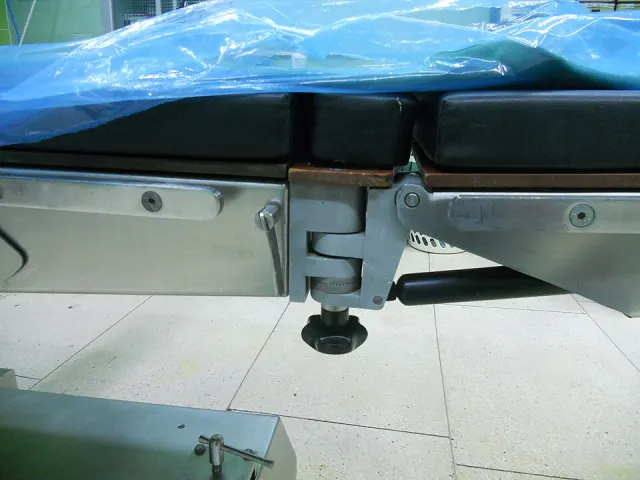
Orthopaedic operating tables and their attachment schedule
Specialised OT table for orthopaedic positioning and traction.
The range above is an indicative planning figure taken from our own research, not a quotation and not an offer. buytogethr is pre-launch and has closed no pools.
What you are actually buying
What is being bought is a column, a sectional radiolucent top and a set of attachments, and the attachments decide what the table can actually do. Traction extensions, leg holders, shoulder and arm positioners, spinal frames and lateral supports are frequently quoted apart, and together they can approach the price of the table. Radiolucency matters over the length that will be imaged, not just the trunk, and clearance under the top has to suit the image intensifier already in that theatre. Safe working load should be stated in reverse orientation and with traction applied. Buyers regularly compare base prices across quotes whose attachment lists are not the same equipment at all.
Why orthopaedic operating table suits collective purchasing
Theatre equipment of this value belongs in the group-negotiation basket, where financing or lease terms can be put to bidders alongside the purchase. It pools less cleanly than an ICU pump, and it is worth saying so: surgeon preference and the attachment list drive the choice, and a pool that forces a single table on every theatre will lose members before it closes. The workable structure is a common core specification, column, top, radiolucent length, load rating, service terms, with attachments quoted as priced options each institution selects for itself. Volume is then real on the table while clinical choice survives at the accessory level.
Pin down before price
- Radiolucent length and the clearance beneath the top, verified against the image intensifier in that theatre
- Safe working load in normal and reverse orientation, and with traction applied
- Deck sections, how leg sections detach, and how long a reconfiguration takes with the staff you have
- Every attachment priced individually: traction, leg holders, shoulder and spinal positioners, rail standards
- Power arrangement, battery endurance and the manual or hydraulic override when power fails
What drives ten-year cost
- Hydraulic seals, actuators and battery packs, the wear items on any powered column
- Table pads and radiolucent covers, replaced on wear and on infection control grounds
- Maintenance cover with annual load and function testing, and the response time when a fault strands a list
- Attachments bought later at list price if they were not fixed in the original schedule