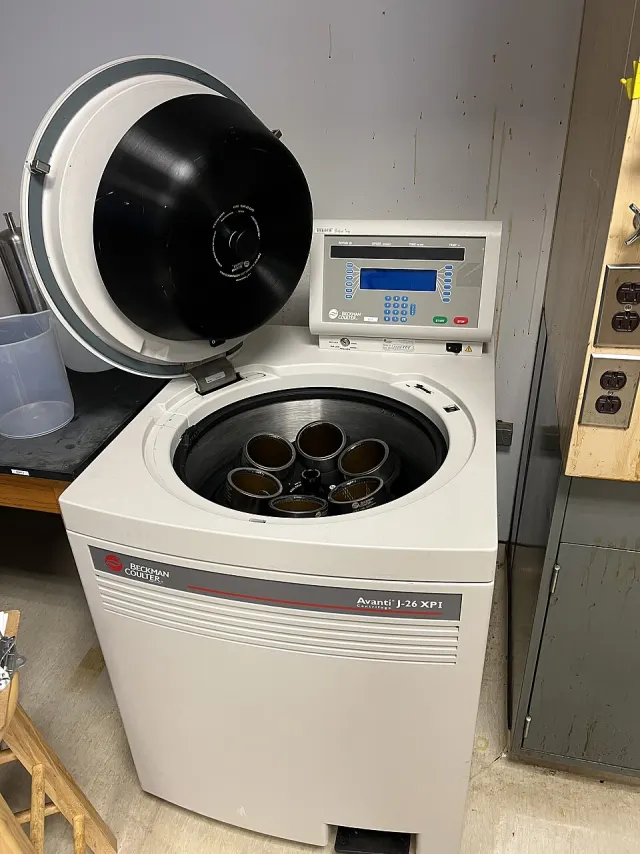
Centrifuge: a small line that belongs in a laboratory package
Bench sample separation before biochemistry and serology runs.
The range above is an indicative planning figure taken from our own research, not a quotation and not an offer. buytogethr is pre-launch and has closed no pools.
What you are actually buying
A bench centrifuge is bought by configuration, not by name. What determines whether it fits the laboratory is the relative centrifugal force it reaches with the rotor actually supplied, the tube sizes and positions per run, whether the rotor is fixed-angle or swing-out, and whether refrigeration is needed for the assays and blood products involved. Rotors, buckets and tube adapters are commonly quoted as extras, so the working machine costs more than the figure on the first page. The recurring mistake is specifying speed in revolutions per minute. The force a sample experiences depends on rotor radius, so two machines at the same stated speed are not equivalent, and a protocol written in g cannot be verified from an RPM figure.
Why centrifuge suits collective purchasing
Honest answer: on its own this is a weak pool. The ticket is small, so even the best price on a single bench unit moves nobody's budget, and delivering a low-value item to scattered addresses eats the benefit. It works when it travels with the rest of the laboratory, alongside analysers, incubators, microscopes, refrigerators and autoclaves, as one departmental award, which is where a supplier will sharpen accessories and service terms. Specification agreement is the easy part here. The reason to pool is order size and a single service contract covering the whole laboratory, not the unit price of the centrifuge.
Pin down before price
- Maximum RCF in g with the rotor supplied, not RPM alone
- Rotor type, tube sizes, positions per run, and adapters included in the price
- Refrigerated or ambient, with the temperature range the assays require
- Imbalance cut-out, lid interlock and sealed rotors where infectious samples are spun
What drives ten-year cost
- Rotors, buckets, adapters and tube cushions treated as consumables
- Periodic speed and timer calibration required for laboratory accreditation
- Motor brush replacement on designs that are not brushless