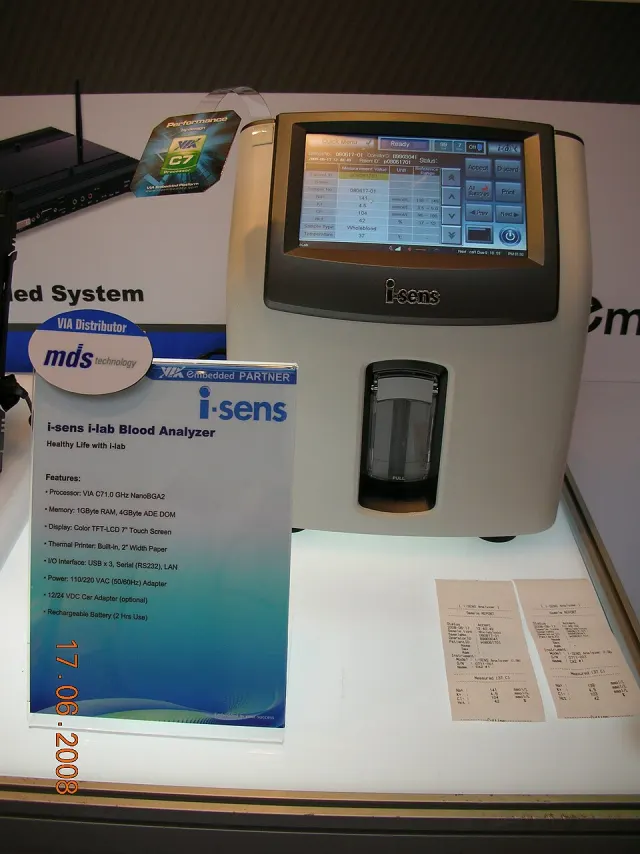
Electrolyte analyser: standardise one make across the hospital
Sodium, potassium and chloride testing for ICU and emergency.
The range above is an indicative planning figure taken from our own research, not a quotation and not an offer. buytogethr is pre-launch and has closed no pools.
What you are actually buying
This is a small ion-selective electrode instrument, usually bought several at a time for critical care, casualty and the main laboratory. Quotes vary on the measured panel, with sodium, potassium and chloride joined by ionised calcium or lithium or not; on the sample types accepted and whether whole blood can go straight on; on stated electrode life; and on the form the consumables take, from integrated snap packs with sealed waste to separately bottled solutions. Because the ticket is modest, buyers treat it as a commodity and let each department order its own. The result is three makes in one hospital, three sets of electrodes on the shelf, and no leverage on any of them.
Why electrolyte analyser suits collective purchasing
Small unit price and large unit count is a good combination for pooling. The specification is short and clinically uncontroversial, so institutions agree one without argument, and a hospital standardised on a single make holds fewer spare electrodes and trains its staff once. Across a group of hospitals the recurring item, electrodes and reagent packs, becomes a quantity worth quoting on, which one instrument never is. Expect the gain to sit in the consumable schedule rather than the headline price, and write the pool that way: fixed electrode and pack prices for a defined term, with the instruments as the smaller half of the award.
Pin down before price
- Measured panel, including ionised calcium or lithium if critical care will need them
- Sample types accepted: serum, plasma, whole blood, urine, dialysate
- Electrode life stated in tests or months, with replacement price fixed for the term
- Consumable format, pack shelf life after opening, and auto-calibration consumption
- Sample volume, daily maintenance routine and result transfer to the patient record
What drives ten-year cost
- Reference and ion-selective electrode replacement at the stated interval
- Calibration and pack draw that continues on days with very few samples
- Pump tubing, cleaning solutions and routine deproteinisation