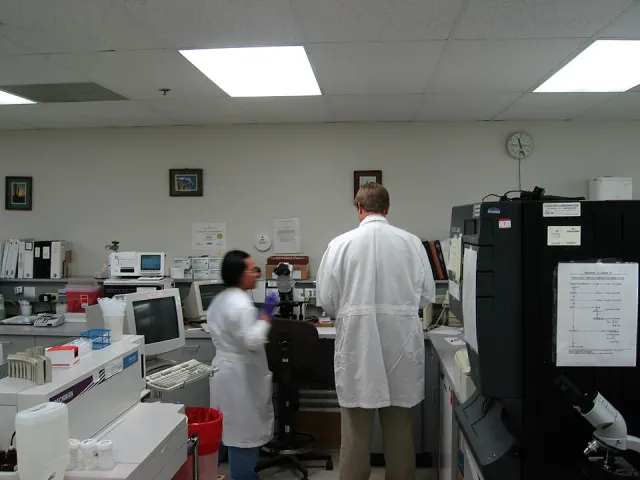
Haematology analyser: one specification, many pathology labs
CBC cell counter for routine pathology workload.
The range above is an indicative planning figure taken from our own research, not a quotation and not an offer. buytogethr is pre-launch and has closed no pools.
What you are actually buying
The purchase is a cell counter of a stated differential class together with the diluent, lyse, rinse and control supply that feeds it. Quotes separate on the differential, three-part or five-part; on whether sampling is closed cap-piercing or open tube; on minimum sample volume for paediatric and neonatal draws; on autoloader capacity; and on which added modes, such as reticulocyte or body-fluid counting, are enabled rather than merely available. What buyers underestimate is idle consumption. An analyser draws reagent on start-up, background check and shutdown whether or not samples follow, so a low-workload laboratory pays far more per reported count than the rated throughput suggests. Flagging rates that push samples to manual slide review add staff time no quotation shows.
Why haematology analyser suits collective purchasing
A complete blood count is a complete blood count. The reported parameter list barely moves between a nursing home, a district hospital and a teaching laboratory, which makes this one of the easier lines to write a single specification for. The sensible pooling unit is a throughput band rather than one model, so a small laboratory is not carried into an instrument sized for someone else's workload. Demand is highly fragmented and the supplier side is not. Awarding the instrument together with a multi-year reagent and control schedule turns scattered pathology workloads into a volume worth quoting seriously on.
Pin down before price
- Three-part or five-part differential, with the reported parameter list attached
- Closed cap-piercing or open aspiration, and minimum sample volume for neonates
- Reagent pack sizes, plus declared start-up, background and shutdown consumption
- Controls at all levels, calibrator supply and the quality control programme included
- Autoloader capacity and bidirectional LIS connectivity
What drives ten-year cost
- Diluent, lyse and rinse consumed on low-sample and idle days
- Monthly controls and calibrators across the instrument's working life
- Flow cell, aperture and probe servicing
- Service cover and sample turnaround when the counter is down