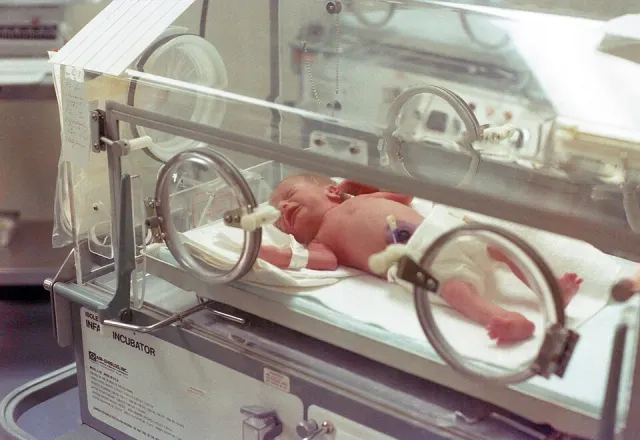
Infant warmers pooled as a complete resuscitation station
Open-care radiant warmer for newborn stabilisation after delivery.
The range above is an indicative planning figure taken from our own research, not a quotation and not an offer. buytogethr is pre-launch and has closed no pools.
What you are actually buying
A radiant warmer is bought for the labour room and the newborn corner as a resuscitation station, not simply as a heater. The frame carries a radiant element, a bassinet that tilts and adjusts for height, an X-ray tray, side panels and drawers; control is servo skin temperature with a manual mode and alarms. Quotes vary on heater element type and pre-heat time, on control and alarm behaviour, and above all on what is mounted on the trolley — suction, an oxygen blender, a T-piece resuscitator, an Apgar timer. The common error is procuring the warmer and finding at commissioning that the resuscitation package is a separate quotation, so the unit stands in the labour room incomplete.
Why infant warmer suits collective purchasing
Warmers pool well. Every maternity unit needs several — labour room, theatre, postnatal, neonatal care — so quantities aggregate quickly across even a small group of institutions, and the specification is short enough to standardise without argument. Both imported and domestically manufactured units meet it, which makes technical qualification, rather than price, the step that decides the outcome: qualify on control behaviour, alarms and build, then let qualified suppliers compete. A pool should specify the complete station, because that is what a labour room needs and it is the part an individual buyer most often ends up purchasing afterwards, alone.
Pin down before price
- Servo skin-temperature control with manual mode, alarm set and probe type
- Heater element type and the time taken to reach set temperature
- Bassinet height range, tilt and X-ray tray
- Resuscitation items on the trolley: suction, oxygen blender, T-piece, timer
What drives ten-year cost
- Skin temperature probes, a steady recurring consumable
- Heater element replacement and periodic calibration of the servo control
- Mattress and bassinet parts under repeated disinfection