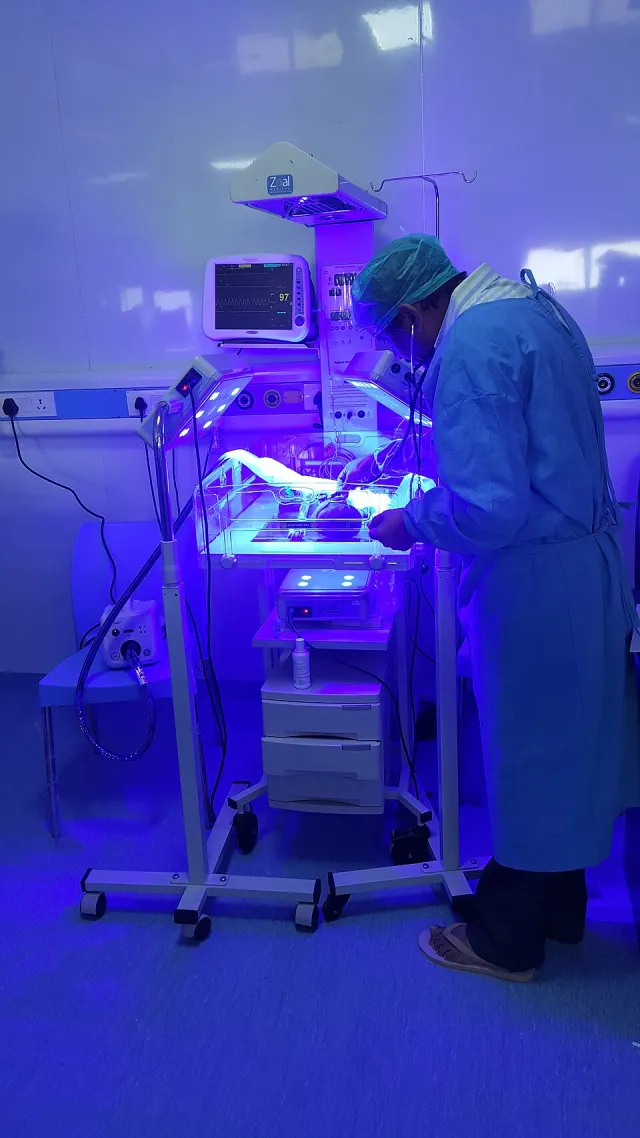
Phototherapy units specified on irradiance, not on lamp count
LED phototherapy for neonatal jaundice in the nursery.
The range above is an indicative planning figure taken from our own research, not a quotation and not an offer. buytogethr is pre-launch and has closed no pools.
What you are actually buying
A phototherapy unit delivers light in a defined wavelength band to a newborn, over a defined area, at a defined distance. What varies between quotes is the source, LED or fluorescent, the number of treatment surfaces, whether the unit works overhead, underneath or both, and whether it can sit over a warmer or an incubator already in the unit. The figure that matters is measured irradiance across the effective treatment area at the stated working distance, and how uniform it is. The frequent mistake is comparing units by lamp count or rated wattage, then buying no radiometer, so nobody can tell in service whether output has fallen. Ask how irradiance is verified and how source hours are tracked.
Why phototherapy unit suits collective purchasing
A small-ticket item that every maternity and neonatal unit uses and buys several of, so quantity builds easily across institutions. Supply is largely domestic and already competitive, so the honest position is that pooling will not move the unit price the way it can on a large machine. The value here is different: a common specification written around measured irradiance rather than lamp count, verified once for the whole group, with contracted terms for source replacement and a radiometer for each institution. The specification discipline is the return, and it travels to every unit in the pool.
Pin down before price
- Irradiance at the stated working distance, measured across the treatment area
- Source type and rated life, with an hour meter fitted to the unit
- Single or double surface, and overhead, underneath or both
- Compatibility with the warmers and incubators already in the neonatal unit
- A radiometer supplied and specified for periodic verification
What drives ten-year cost
- LED module or lamp replacement, and its lead time once a unit is down
- Verification of irradiance, without which units run below output unnoticed
- Stands, castors and mounting hardware moved daily around the ward