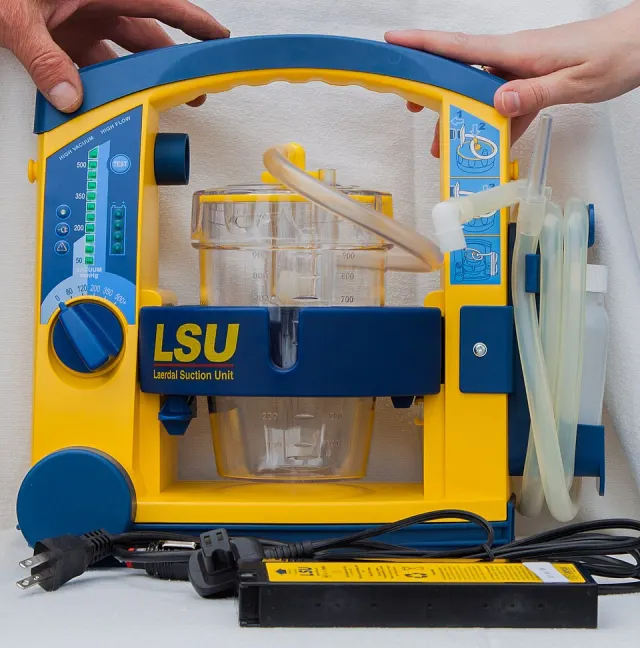
Suction apparatus for ward, theatre and emergency areas
Portable and ward suction for OT, ICU and emergency.
The range above is an indicative planning figure taken from our own research, not a quotation and not an offer. buytogethr is pre-launch and has closed no pools.
What you are actually buying
Suction is bought in several forms: a mobile electric machine with jars and a vacuum regulator, a rail-mounted regulator fed from pipeline vacuum, a portable battery unit for transfer and emergency, and a manual or foot-operated unit as backup. They are not interchangeable. Theatre work needs high flow and rapid recovery; thoracic and neonatal use needs controlled low vacuum; ward suction sits between. Jars may be autoclavable and reusable or a disposable liner system, and that choice sets the reprocessing workload. Buyers commonly issue one blanket line for the whole hospital, then find the theatre unit cannot keep up and the neonatal unit cannot be turned down far enough.
Why suction apparatus suits collective purchasing
Be honest about the size of the prize here. No single unit is worth much, so this pools on volume and standardisation rather than on the depth of any negotiation, and the supplier base is broad and largely domestic. What aggregation genuinely buys is discipline: agreeing two or three configurations across a group instead of a dozen, so jars, tubing, filters and liners become common stock and one warranty regime covers the fleet. It also suits being carried inside a larger department package rather than bid alone, where it can ride the technical qualification and service terms already being negotiated.
Pin down before price
- Application stated by department, theatre high flow, ward, thoracic and neonatal low vacuum, portable transfer, each as its own line
- Vacuum level, free air flow and motor duty rating for sustained running
- Jar system: autoclavable reusable or disposable liner, capacity, overflow cut-off, hydrophobic bacterial filter
- Power and mobility: trolley, portable with stated battery run time, or rail regulator, plus manual backup where required
- Noise level, and the tubing, handle and nozzle package included in the base price
What drives ten-year cost
- Tubing, catheters, filters and liners, the recurring line that outweighs the machines over ten years
- Jar breakage, gaskets and seals on reusable systems, plus the labour of reprocessing them
- Pump diaphragm or piston service and motor wear parts at defined running hours
- Where pipeline vacuum already exists, the regulator route may remove the machine cost entirely; compare before ordering either